
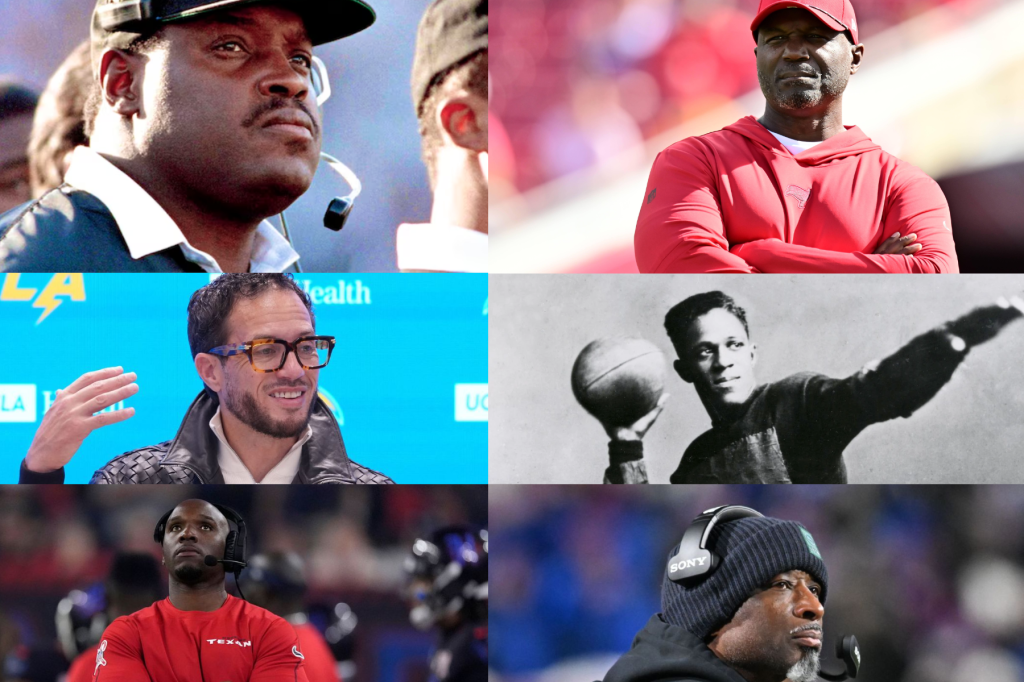
It has been 105 years since the NFL hired its first Black head coach. Those 105 years have not been enough time for Black head coaches to be welcomed into the league.
At the end of the 2025-2026 NFL season, there were a record-tying ten head coaching spots open in the league. By the end of the hiring cycle, all those spots were taken; nine by white men, one by a Lebanese man, and zero by Black men. The NFL says they work to add diversity to its league with initiatives such as the Rooney Rule, which mandates teams to interview at least two minority candidates for some leadership roles, like the head coach position. The NFL also says they believe every human-being deserves a chance to make an impact, showcase their skills, and be successful leaders in the league regardless of their skin color. So, why is it that the NFL is seemingly hindering Black people from becoming head coaches?
The answer is much bigger than the league.
I: A Short History Lesson on the Black Head Coach
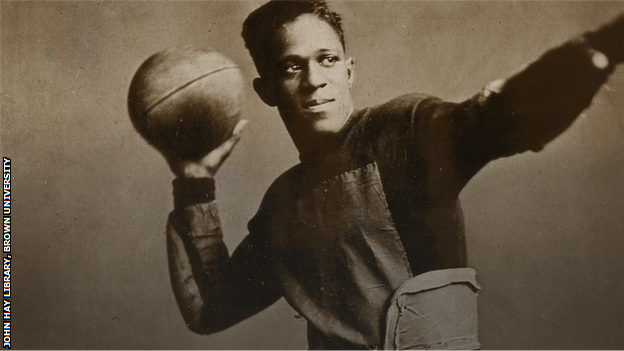
In the 1920s, Fritz Pollard made history as the first African-American coach in the NFL, leading the Akron Pros while also being a star player on the team. However, shortly after Pollard left the league, White NFL head coaches and owners implemented a “gentleman’s agreement” that banned Black people from the league. This “gentleman’s agreement” wasn’t something that was written or publicly spoken about. But it had the power to stop Black people from coming into the league for over a decade. It wasn’t until four brave players—Kenny Washington, Woody Strode, Marion Motley, and Bill Willis— approached the league, ready to make a change.
From the moment the Los Angeles Rams signed Kenny Washington and Woody Strode in 1946, there was a new window of opportunity for Black people in the NFL. Other players followed in their lead. Even before the Civil Rights Movement, they proved that Black people deserved a place where most thought only white people belonged. With that said, racial tensions and segregation were still running rampant in the United States at the time; putting Black people in power was still something to be frowned upon. So, it wouldn’t be until sixty-eight years later, in 1989, that we would see another Black head coach (Art Shell) be hired in the league.
II: The League’s Present Problem
In 1989, Shell was the only Black Head coach in the league. It seems that thirty-seven years later, there hasn’t been that much of a change. After the results of the 2026 hiring cycle, no Black people filled the ten head coaching spots that were available. And to make matters worse, there were only three Black head coaches left in the league, half as many as there were the previous season.
Yet, the NFL had safeguards in place to prevent a lack of diversity in hiring. As previously mentioned, the Rooney Rule, which was introduced in 2003, was meant to create opportunities for minorities seeking jobs in the NFL. Teams would be required to interview two minority individuals outside of the NFL for head coaching positions and one minority individual for offensive and defensive positions. This seems like it would work. If you introduce more minorities to the league, then more minority individuals are likely to be hired, right?
Not necessarily.
One issue with this rule (and why it probably didn’t work this hiring season) is that it has loopholes. All the front office has to do is interview two Black or Brown people. That is it. They don’t have to hire them or actually consider them for a head coaching job. This makes the rule what some call “a check-the-box procedure.”
Another issue with this rule is that it doesn’t address the “why” that is posed when looking at racial disparities in head coaching and prejudice in the workplace. This is when the scope must be widened beyond the league to look at the lack of Black Head coaches as a societal issue, not merely a league issue.
When Black people are turned down from jobs or paid less than their white counterparts, it is often due to a deep systemic problem stemming from decades of racism and discrimination. There was a time when formerly enslaved people couldn’t get the same jobs as White people. There were times when Black people could not work in the same buildings as White people.
There was a time in the NFL when Black people could not get the same jobs as White people.
While all of this may seem like it was too long ago to matter, the consequences of race relations in America are still here today, as we see Black people trying to “catch up” to where white people are because slavery, segregation, and discrimination have placed them so far behind.
Additionally, the negative generational beliefs that some people have about Black people are passed down from generation to generation, so they stick with us. It floats through our conversations and decision-making, even if we don’t realize it.
For instance, if we are looking at owners like Jerry Jones of the Dallas Cowboys or Buffalo Bills team president Terry Pegula, who have a say in who becomes head coach, the Rooney Rule likely holds no weight. These are white men who were well enough alive during the Civil Rights Movement and are still alive to allegedly spew racism at Black people and to sneak microaggressions into their press conferences.
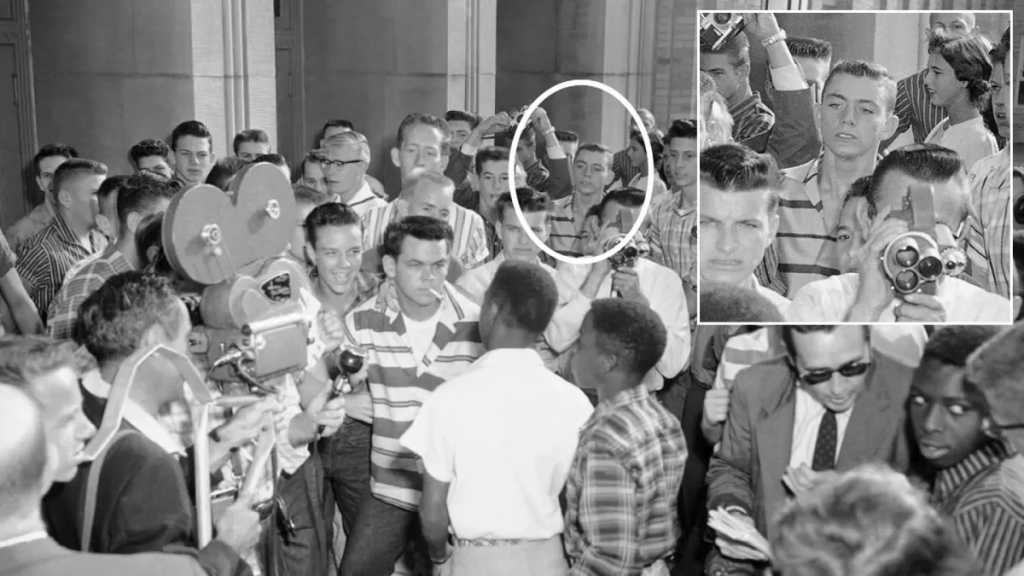
The negative ideas some front offices have about Black people were formed decades ago and are unlikely to change because the NFL tells them they should try to be diverse or they should interview more Black people. This seems to put the NFL at a loss. But, this does not mean they should give up on Fritz Pollard or Kenny Washington’s missions; but it does mean they have to make a change.
III: A Change Will Come
The lack of Black NFL head coaches is clearly a bigger systemic problem. It cannot be solved with a simple rule, like the Rooney Rule. Creating a system within the league’s hiring process will be difficult without creating another “check the box” process or getting into a grey area where the NFL is only hiring people for their skin color, and not for their skills.
However, there is still room for improvement. With the 2026 hiring cycle ending with no Black head coaches hired, the NFL was put on notice.
Players have noticed the NFL has a diversity problem, with some— like wide receiver Terry McLaurin of the Washington Commanders— saying, “You can’t just overlook that discrepancy…Obviously, you want the best candidate for the job, whether it’s someone who is Black, white, Asian, or whoever. However, when you have a big representation of African American players that are in your league, you would like to see that represented in coaching as well.”
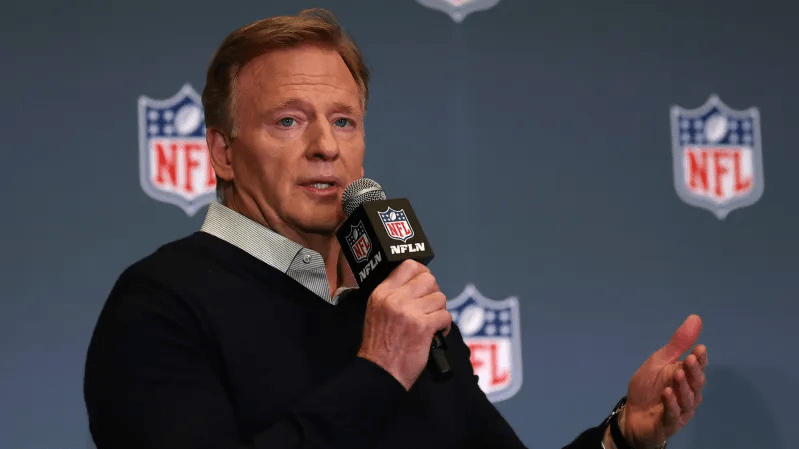
The NFL commissioner has noticed that a change is needed as well, stating that the NFL will be “reevaluating everything we’re doing….including every aspect of our policies in our program to meet the challenges of today and tomorrow rather than yesterday.”
With Goodell’s decision-making power and other NFL players speaking out, there is hope that a change can be made to amend the choices of so many NFL teams.
There is hope that a change will be made, as the lack of diversity in the NFL has finally reached a point where it cannot be ignored.

 My Little Musings...