

The singers whose music you listen to, the people who write the books you read, and the artists who paint the streets have creativity in them. In fact, it’s in all of us, even if we have to work to cultivate it. But it seems like it’s always been a thing in which you’re either creative or you’re athletic, never both. Is this truly the case?
Is creativity used in sports, or is it only applied in art? And do athletes need to use creativity to deliver results just like artists do? Luckily, the answers to these questions begin with imagination.
I: Pure Imagination
If you fear public speaking and imagine yourself confidently standing in front of a crowd, taking in every detail; the way you stand, what the air smells like, the colors of people’s clothes, and the feeling of the podium under your fingertips, it may reduce the fear you feel stepping into that situation.
This type of imagination, called mental imagery or visualization, is more than just seeing; it’s about experiencing. While athletes may not use mental imagery for fear of public speaking, they can use imagery for competition anxiety.
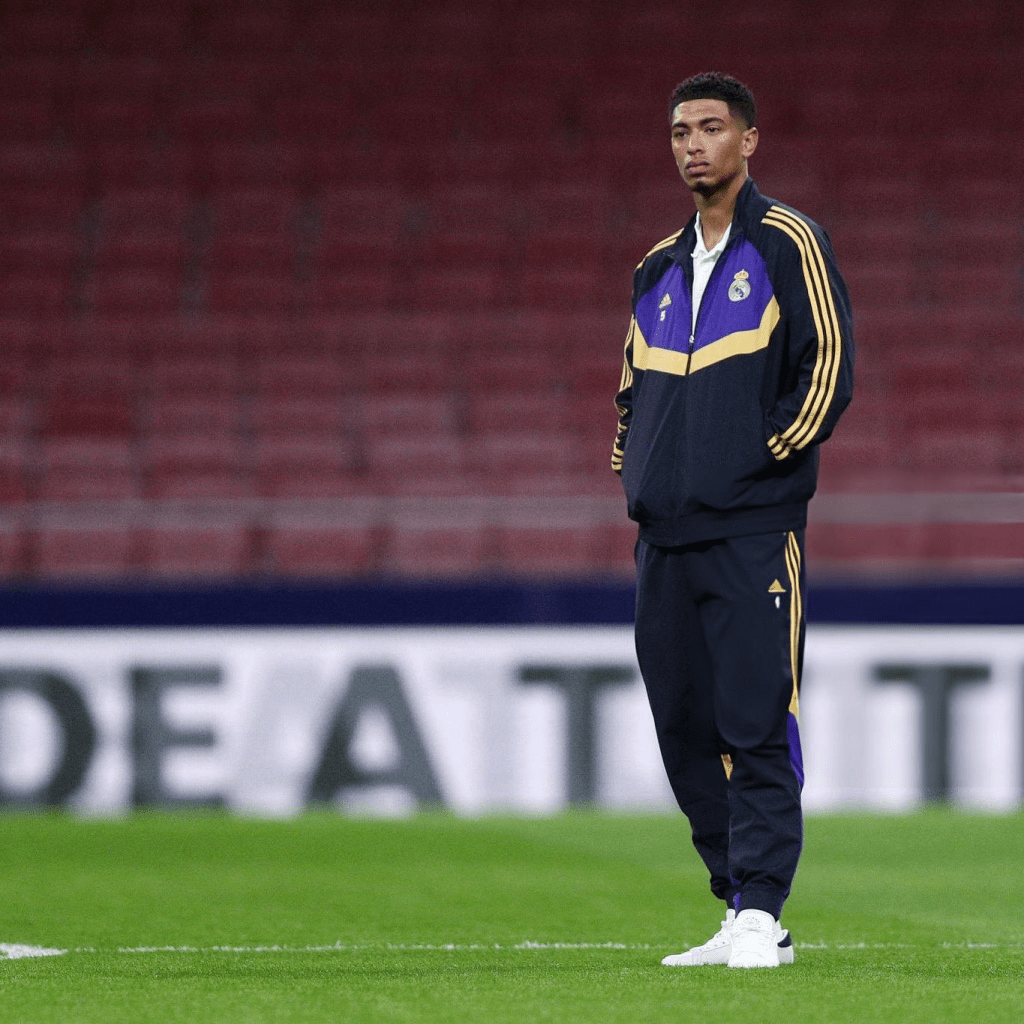
Real Madrid midfielder Jude Bellingham says he visualizes the game all the time before playing. He goes out before every game, typically with his hands in his pockets, and sees everything. “I see the pitch, the grass, my playing position… That way, I feel calmer, I know where I’m going to be on the pitch. It’s something I’ve been doing throughout my career, and thanks to that, I go into matches without nerves and am prepared for everything,” he told Madrid TV in a postgame interview.
Furthermore, MLB third baseman Evan Longoria has discussed in the past how being introduced to visualization has changed the way he prepares for the game and how he plays it too.
“Through visualization, you can start to simplify the game… [Visualization has] been—probably—on par with work ethic and actually just doing things; one of the most important parts of my game,” he says.
Visualization has been in the sports world for some time now. With that, more research has been done looking into the effects of visualization on the game and what it means when players don’t utilize it.
In the International Journal of Physical Education, Sport, and Health, Dr. Ashwani Bali wrote, “Anxiety has both psychological and physiological implications in sports performance. For example, once aroused, it raises the general arousal level of the player to such an extent that he finds it hard to concentrate on his game due to constant bombardment on his nervous system and his inability to diffuse tension caused by [a] rising anxiety level…Under such a condition, the player is not focused—he wishes to do one thing but does something else. He loses control over his body and mind.”
On top of Dr. Bali’s work, other studies have shown that visualization can aid and impact athletes both physically and psychologically.
A study in the International Journal of Multidisciplinary Education and Research found that the level of anxiety in athletes after they practiced visualization was less than before. Additionally, the athletes who didn’t perform visualization at all had more anxiety than the athletes who did, and their level of anxiety remained invariable throughout the study.
Another recent study took amateur and university-level soccer players and trained them in motor imagery (the imaginary execution of movement without physically moving).
Researchers found that the speed, agility, and reaction time of the experimental group increased after two weeks.
They discovered that imagination could be crucial to athletes’ performance.
II: Tactical Creativity
Tactical creativity in sports is defined as creating efficient, unique, and creative solutions to different situations in the game. An athlete’s scoring efficiency, passing style, and overall performance are dependent on it just as much as their athletic abilities. The use of tactical creativity enables players to enhance their performance by making them unpredictable and versatile.
There was a Lakers game almost three years ago in which LeBron James perfectly displayed tactical creativity with one of his many unique assists.
James saw two defenders quickly closing in on him at the three-point line and needed to act soon. He spotted a seemingly open Anthony Davis in the paint and made a creative play to get a bucket.
He committed a no-look pass to Davis, tricking the defenders and leaving Davis with nobody after him at all. Anthony Davis got an easy two points and even the opportunity to make it three. While this is an excellent example of tactical creativity, it isn’t the only one that shows how it enhances a player’s game.
A study investigated all the goals from the 2010 and 2014 FIFA World Cups, as well as the 2016 UEFA European Football Championship, measuring the creativity of the goals scored. Using the Kruskal-Wallis test and a few other methods, researchers found creativity is a critical factor in successful sports performances.
The most successful teams across the tournaments were found to use creative actions more often and scored goals exceptionally well in comparison. So, if creativity is not only engrained in sports but is also necessary to win, shouldn’t it be a part of everyday training?
III: Don’t Uncoach It
Coaching creativity is a matter of not coaching at all.
Hear me out.
According to Professor Daniel Memmert, there are seven principles—the 7-Ds—that make up and support tactical creativity. One of those principles includes something called deliberate coaching. Deliberate coaching encourages players to create in-game solutions instead of being narrowed down to coaching instructions. This principle can decrease a player’s chances of missing an open player or other “inattentional blindness” in the game. If a player is set on following a specific strategy, they may fail to see a better way to score or problem-solve.
An article published in the Encyclopedia of Creativity, Second Edition, supports Memmert. It states that deliberate coaching gives athletes the opportunity to seek out and see different, unexpected alternate solutions that may even be better than merely applying the directions from a coach.
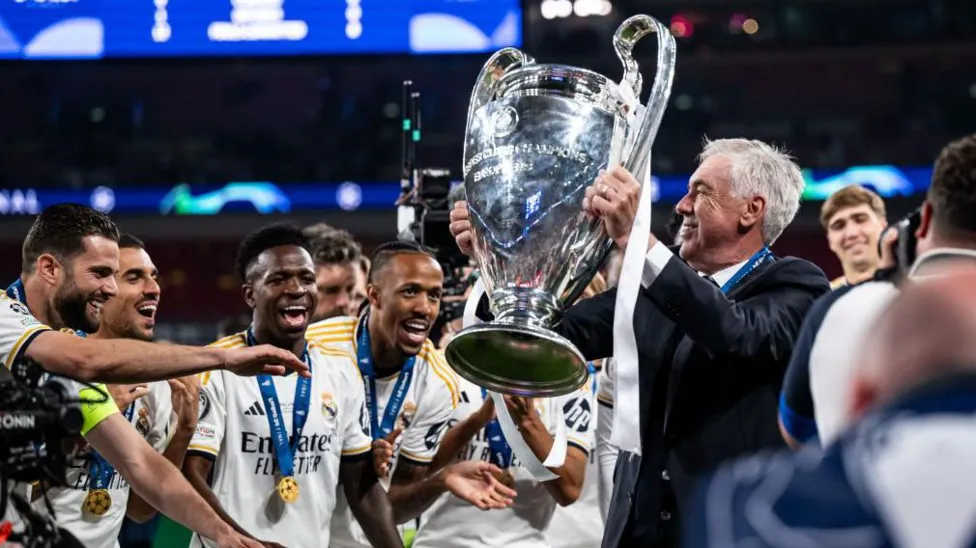
It’s only a matter now to have coaches apply deliberate coaching to training sessions, as creativity is obviously integrated into the winning teams and players.
Though, reasonably, this may require a lot of trust in one’s team.
I think a coach who has enough trust in his players to win, Carlo Ancelotti, Real Madrid’s manager, said it best. “I believe strongly in the players’ creativity when they have the ball, and I don’t like to make them obsess over predefined shapes; I leave it down to their initiative… Creativity is fundamental, especially with players like ours who have such great talent.”

 My Little Musings...